

High Histamine Foods to Avoid (and How They Affect You)
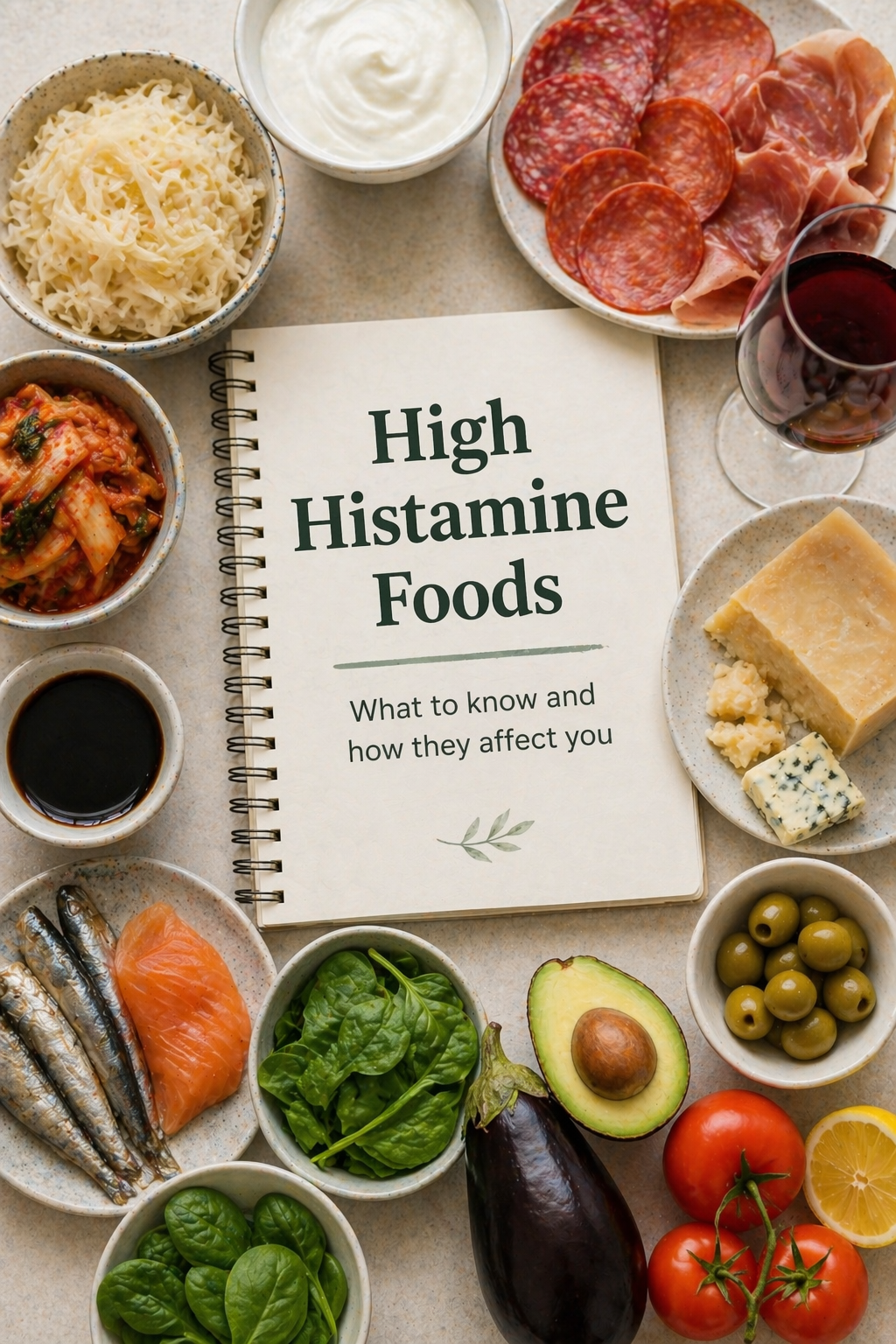
Some foods naturally contain higher levels of histamine or can trigger its release in the body. For people who are sensitive, these foods may lead to noticeable symptoms after eating.
Understanding which foods are higher in histamine can help you make more informed choices.
What Are High Histamine Foods
High histamine foods are those that either contain histamine or encourage the body to release it. These foods are often aged, fermented, or processed in ways that allow histamine levels to increase over time.
Not everyone reacts the same way, but for some individuals, these foods can contribute to symptoms.
Common High Histamine Foods
Fermented Foods → Higher Histamine Levels
Sauerkraut, kimchi, and pickled foods
Yogurt and kefir
Soy sauce, miso, and other fermented products
Aged Meats → Histamine Builds Over Time
Salami, pepperoni, and deli meats
Smoked or cured meats
Processed meats
Aged Cheeses → Concentrated Histamine
Parmesan, cheddar, and blue cheese
Other aged dairy products
Alcohol → Adds to Histamine Load
Wine (especially red wine)
Beer and champagne
Other fermented drinks
Certain Fruits and Vegetables → Can Trigger Symptoms
Spinach, tomatoes, eggplant
Avocado
Citrus fruits
Fish That Isn’t Fresh → Rapid Histamine Formation
Canned fish
Smoked or dried fish
Fish that has been stored for longer periods
What These Foods May Do In the Body
When histamine intake increases, the body needs to break it down efficiently. If that process is slower or overwhelmed, histamine may build up.
This can contribute to symptoms like headaches, flushing, digestive discomfort, or feeling off after eating.
How to Approach High Histamine Foods
Focus on Fresh Foods
Fresh meats and fish tend to be lower in histamine
Recently prepared foods may be better tolerated
Pay Attention to Patterns
Notice how you feel after certain meals
Identify foods that may trigger symptoms
Reduce Overall Load
Limiting multiple high histamine foods at once may help
Small changes can make a difference
Final Thoughts
High histamine foods are not necessarily unhealthy, but they may affect some people differently.
Understanding how your body responds can help guide better food choices and support overall well-being.
