

Low Histamine Foods: What to Eat and What to Avoid
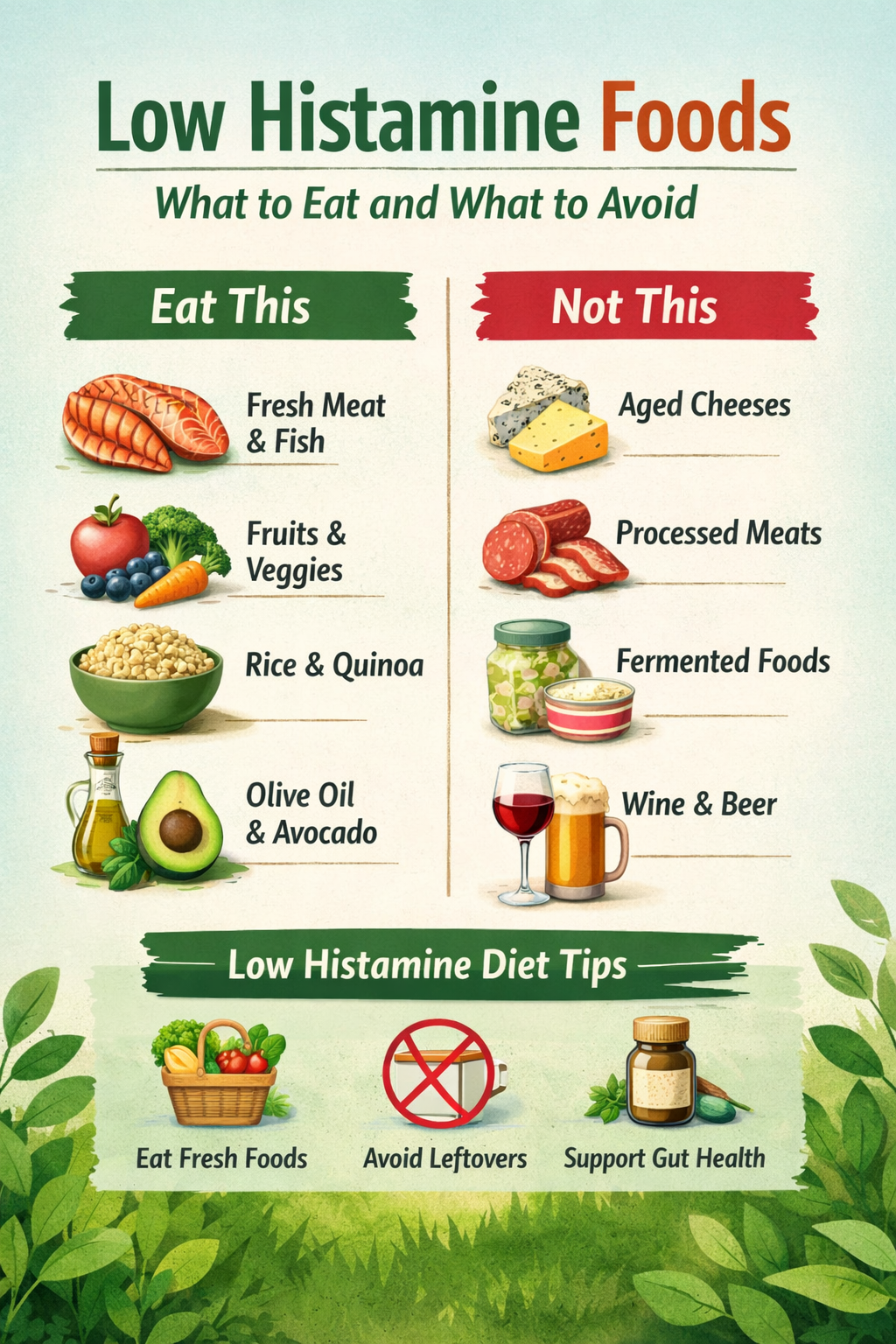
Low Histamine Foods: What to Eat and What to Avoid
If you have histamine intolerance, choosing the right foods can make a significant difference in how you feel. Some foods are naturally high in histamine, while others can trigger its release or block its breakdown. Focusing on fresh, low-histamine options can help reduce symptoms and support overall health.
What Are Low Histamine Foods
Low histamine foods are foods that either contain minimal histamine or do not trigger histamine release in the body. These are typically fresh, minimally processed foods that have not been aged, fermented, or stored for long periods.
Low Histamine Foods to Eat
Fresh meats
Chicken, turkey, and fresh beef
Freshly cooked and not processed
Avoid leftovers when possible
Fresh fish (same day)
Freshly caught or same-day fish
Avoid canned, smoked, or leftover fish
Freeze immediately if not eating right away
Vegetables
Carrots, zucchini, broccoli
Cucumbers, leafy greens, sweet potatoes
Most fresh vegetables are well tolerated
Fruits
Apples, blueberries, pears
Mango, watermelon, grapes
Avoid overripe, fermented, and dried fruit
Grains and starches
Rice, quinoa, oats
Gluten-free grains are typically well tolerated
Freshly prepared is best
Healthy fats
Olive oil, coconut oil
Avocado (may trigger symptoms in some people)
Butter or ghee if tolerated
High Histamine Foods to Avoid
Aged cheeses
Cheddar, parmesan, blue cheese
Histamine increases with aging
Processed and cured meats
Salami, bacon, deli meats
Contain preservatives and higher histamine levels
Fermented foods
Sauerkraut, kimchi, yogurt
Vinegar-based foods
Alcohol
Wine, beer, champagne
Can both contain and trigger histamine
Certain fish
Tuna, mackerel, sardines
Especially when not fresh
Leftovers and stored foods
Histamine increases over time
Reheating does not remove histamine
Tips for a Low Histamine Diet
Focus on freshness
Eat foods as fresh as possible
Freeze leftovers immediately if needed
Avoid slow-cooked or long-stored meals
Keep meals simple
Fewer ingredients make it easier to identify triggers
Stick to whole, unprocessed foods
Avoid packaged foods with additives
Track your symptoms
Everyone’s tolerance is different
Keep a simple food journal
Identify patterns over time
Support histamine breakdown
Nutrients like vitamin C and B6 may help
DAO enzyme supplements can support digestion
Gut health plays a key role
Recommended Supplements for Histamine Support
These supplements can help support histamine balance and reduce symptoms when used alongside diet and lifestyle changes.
DAO Enzyme
Helps break down histamine from food and is best taken before meals.
Quercetin & Vitamin C
Quercetin supports mast cell stability and helps reduce histamine release. Vitamin C acts as a natural antihistamine and supports histamine breakdown. This supplement includes both.
👉 Shop Pure Encapsulations HistReset
Low-Histamine Probiotic
Supports gut balance without introducing histamine-producing strains.
👉 Shop Histamine-Friendly Probiotic
As an Amazon Associate, I earn from qualifying purchases.
Final Thoughts
A low histamine diet can be a powerful tool for reducing symptoms and improving quality of life. By focusing on fresh, whole foods and avoiding common triggers, many people find significant relief over time.
