

Types of Magnesium (And Which One You Actually Need)
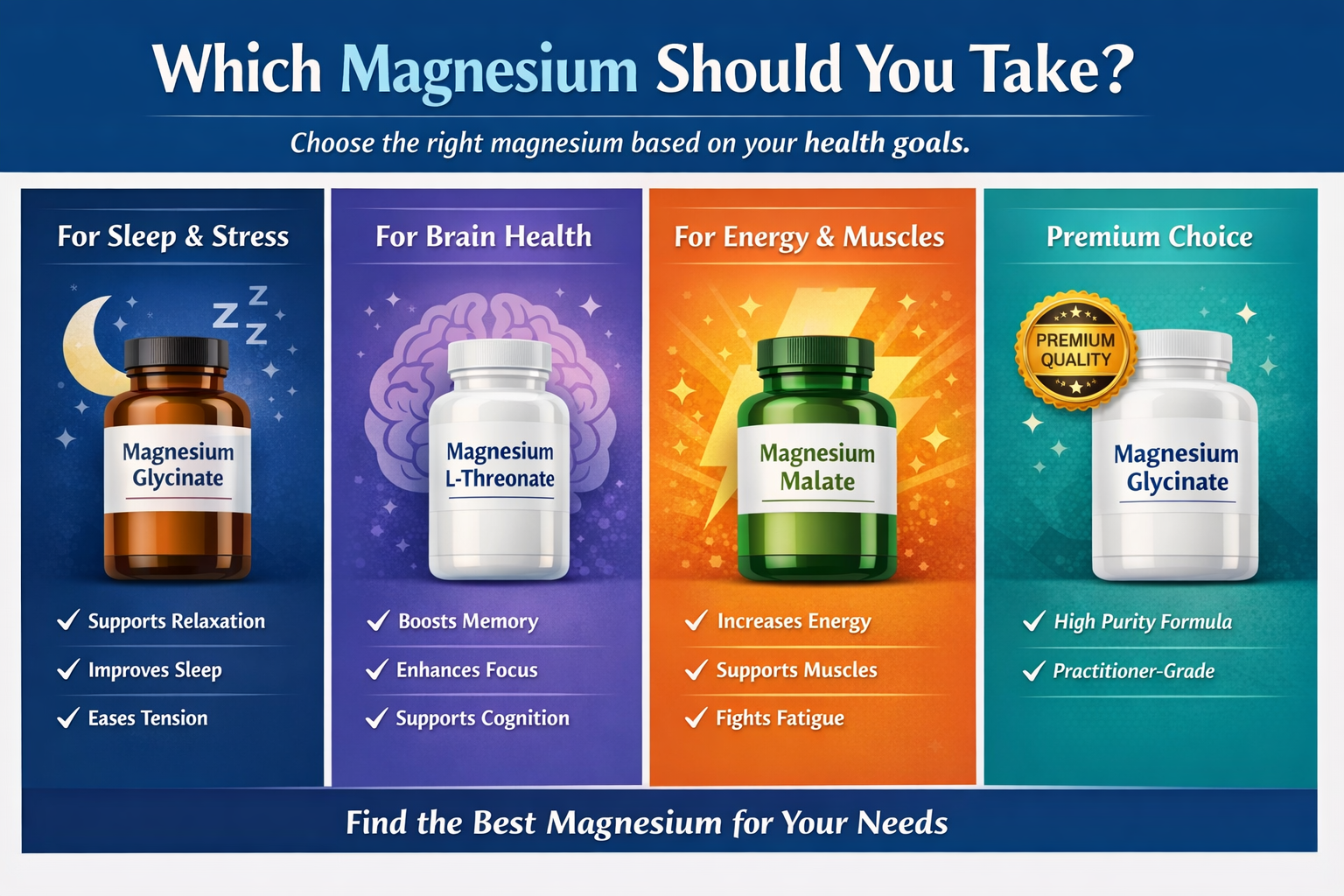
Types of Magnesium
Magnesium is one of the most important minerals in the body, yet many people don’t get enough of it. While adding magnesium can be beneficial, choosing the right type makes a big difference.
Different forms of magnesium are used for different purposes—some are better for sleep, others for digestion, and some for energy or brain health.
Here’s a simple breakdown of the most common types of magnesium and when to use each one.
Magnesium Glycinate (Best for Sleep and Stress)
Magnesium glycinate (also called bisglycinate) is one of the most popular and well-absorbed forms.
It is bound to glycine, an amino acid that has calming effects on the brain and nervous system.
This makes it one of the best options if your goal is better sleep or reduced stress.
Best for:
Sleep support
Stress and anxiety
Relaxation
Magnesium Citrate (Best for Digestion)
Magnesium citrate is highly absorbable but also has a noticeable effect on digestion.
It pulls water into the intestines, which can help promote regular bowel movements.
Because of this, it’s often used for occasional constipation.
Best for:
Constipation relief
Digestive support
Magnesium Malate (Best for Energy)
Magnesium malate is linked with malic acid, which plays a role in energy production.
This form is often used by people dealing with fatigue or low energy levels.
It’s also commonly used for muscle function and recovery.
Best for:
Energy production
Fatigue
Muscle support
Magnesium Threonate (Best for Brain Health)
Magnesium threonate is unique because it can cross the blood-brain barrier.
This allows it to directly support brain function.
Some research suggests it may help with memory, focus, and cognitive performance.
Best for:
Brain health
Memory and focus
Cognitive support
Magnesium Oxide (Best for Occasional Use)
Magnesium oxide contains a high amount of elemental magnesium but is not absorbed as well as other forms.
It is commonly used for digestive purposes, especially short-term relief.
Best for:
Occasional constipation
Short-term use
Magnesium Taurate (Best for Heart Health)
Magnesium taurate combines magnesium with taurine, which supports cardiovascular function.
This form is often used for heart health and blood pressure support.
Best for:
Heart health
Blood pressure support
⭐ Which Magnesium Should You Choose?
If you’re not sure where to start, here’s a simple way to think about it:
For sleep and stress → magnesium glycinate
For digestion → magnesium citrate
For energy → magnesium malate
For brain health → magnesium threonate
Most people do best starting with magnesium glycinate, since it is well-absorbed and gentle on the stomach.
⭐ Best Magnesium Supplements
If you’re looking to try magnesium, choosing a high-quality supplement makes a big difference. Not all brands use the same forms or purity standards.
Here are a few trusted options depending on your goal:
For Sleep and Relaxation
Thorne Magnesium Glycinate is one of the best options for improving sleep and reducing stress. It’s highly absorbable and gentle on the stomach, making it a great place to start.
👉 Shop Thorne Magnesium Glycinate
For energy and muscle support
Thorne Magnesium CitraMate is a well-absorbed blend of citrate and malate that supports energy production, muscle function, and overall wellness.
👉 Shop Thorne Magnesium CitraMate
For brain health
Life Extension Neuro-Mag Magnesium L-threonate is designed to support cognitive performance, helping with memory, focus, and overall brain function.
👉 Shop Life Extension Neuro-Mag Magnesium L-threonate
Premium Option
Pure Encapsulations Magnesium Glycinate is a practitioner-grade supplement known for its clean ingredients and high quality standards.
👉 How to Choose the Right One
If your main goal is better sleep or less stress, start with magnesium glycinate or bisglycinate.
If you want broader support for muscles, heart health, and overall function, a multi-form magnesium supplement can be a good option.
Start with a moderate dose (around 200–400 mg daily) and stay consistent. Most people notice the biggest benefits after using magnesium regularly for a few weeks.
👉 Final Thoughts
Magnesium is one of the most effective and versatile supplements you can take—but the type you choose matters.
Instead of picking randomly, match the form of magnesium to your specific goal.
Small, consistent improvements in sleep, energy, or digestion can make a noticeable difference in how you feel day to day.
This post may contain affiliate links. As an Amazon Associate, we earn from qualifying purchases.
