

Histamine Intolerance: Symptoms, Foods to Avoid, and How to Reduce It
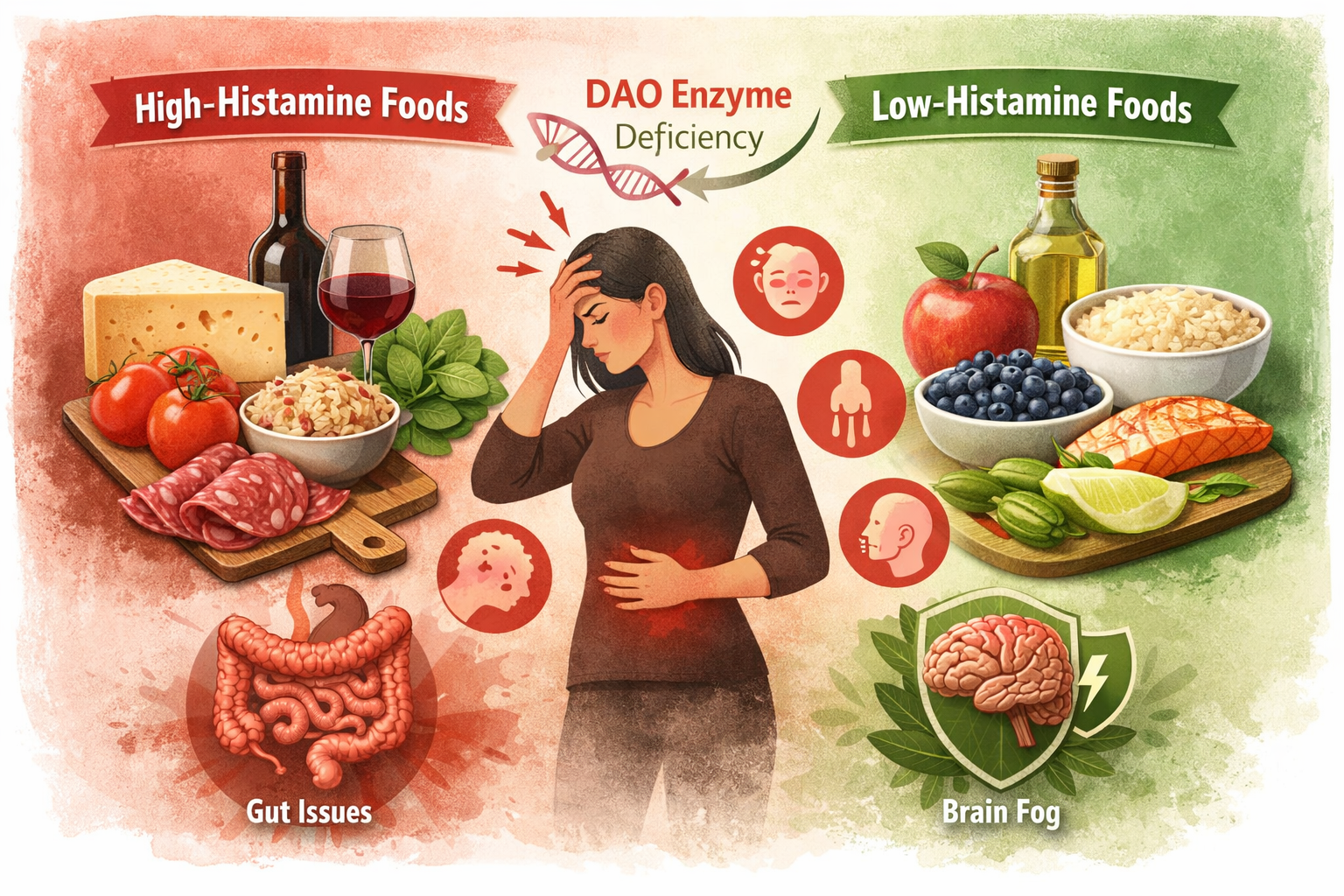
If you’ve ever felt bloated, congested, itchy, or just “off” after eating certain foods — but couldn’t pinpoint why — histamine could be playing a role.
Histamine intolerance is gaining attention as more people realize that common, healthy foods like spinach, tomatoes, and even fermented foods can trigger unexpected symptoms in certain individuals.
Let’s break down what histamine is, why it matters, and how to manage it effectively.
What Is Histamine?
Histamine is a natural compound found in your body that plays several important roles, including:
Supporting your immune system
Helping regulate digestion
Acting as a neurotransmitter in the brain
Your body also gets histamine from foods — especially those that are aged, fermented, or processed.
Normally, an enzyme called diamine oxidase (DAO) helps break down histamine. But when histamine builds up faster than your body can process it, symptoms can start to appear.
What Is Histamine Intolerance?
Histamine intolerance happens when your body struggles to break down histamine efficiently, leading to a buildup in the system.
Unlike a food allergy, this is not an immune reaction — it’s more of a capacity issue, where your body simply can’t keep up with histamine levels.
Symptoms can vary widely, which is why it’s often overlooked. Common symptoms include:
Headaches or migraines
Flushing or redness in the face
Hives or itchy skin
Nasal congestion or sinus pressure
Bloating, diarrhea, or stomach discomfort
Rapid heart rate
Brain fog or fatigue
Many people experience symptoms across multiple systems — digestive, skin, and neurological.
Foods High in Histamine
Aged and fermented foods
Aged cheeses
Yogurt
Sauerkraut
Kimchi
Vinegar
Processed and Preserved Foods
Processed meats (salami, bacon)
Smoked fish
Canned foods
Certain Fruits and Vegetables
Tomatoes
Spinach
Eggplant
Avocados
Alcohol
Red wine
Beer
Champagne
Low Histamine Foods (Safer Options)
If you suspect histamine sensitivity, focusing on fresh, minimally processed foods can make a big difference:
Fresh meats and freshly cooked fish
Most vegetables (except spinach, eggplant, tomatoes)
Rice, oats, and quinoa
Fruits like apples, blueberries, and mango
Olive oil
Freshness is key — the longer food sits, the more histamine it can develop.
How to Reduce Histamine Naturally
If you think histamine may be affecting you, here are practical steps that can help:
1. Eat Fresh Foods
Avoid leftovers sitting in the fridge for multiple days.
2. Limit Aged and Fermented Foods
Even “healthy” fermented foods can be triggers for some people.
3. Support Gut Health
A healthy gut can help improve histamine processing.
4. Manage Stress
Stress can impact enzyme function and histamine levels.
5. Prioritize Sleep
Sleep supports overall metabolic and immune balance.
Is Histamine Intolerance Common?
It’s likely underdiagnosed, partly because symptoms overlap with many other conditions like:
Food sensitivities
Allergies
IBS
Migraines
If multiple symptoms show up after eating certain foods, histamine may be worth exploring.
Top supplements for histamine support
Pure Encapsulations HistReset is a targeted formula that supports histamine balance using ingredients that help break down histamine and stabilize mast cells.
👉Shop Pure Encapsulations HistReset
Life Extension Food Sensitivity with diamine oxidase (DAO) to help break down histamine from foods, supporting better tolerance and reducing symptoms. Note: Must be taken 10-15 minutes prior to eating.
👉Shop Life Extension Food Sensitivity Relief
Seeking Health ProBiota HistaminX supports histamine balance with targeted probiotic strains that avoid histamine-producing bacteria and promote gut health. Note: Brands containing lactobacillus casei, lactobacillus bulgaricus, lactobacillus reuteri, lactobacillus helveticus, and/or streptococcus thermosphilus may increase or contribute to histamine release and should be avoided.
👉Shop Seeking Health ProBiota HistaminX
As an Amazon Associate, I earn from qualifying purchases.
Final Thoughts
Histamine intolerance can feel confusing, especially because many high-histamine foods are typically considered healthy.
The key takeaway is this:
👉 It’s not just about what you eat — it’s about how your body processes it.
By focusing on fresh foods, identifying triggers, and supporting your body’s natural balance, many people see significant improvement in how they feel day to day.
Disclaimer: This content is for informational purposes only and is not intended as medical advice. Always consult a qualified healthcare professional before making changes to your diet or health routine.
