

How Modern Food Is Making People Feel Sick
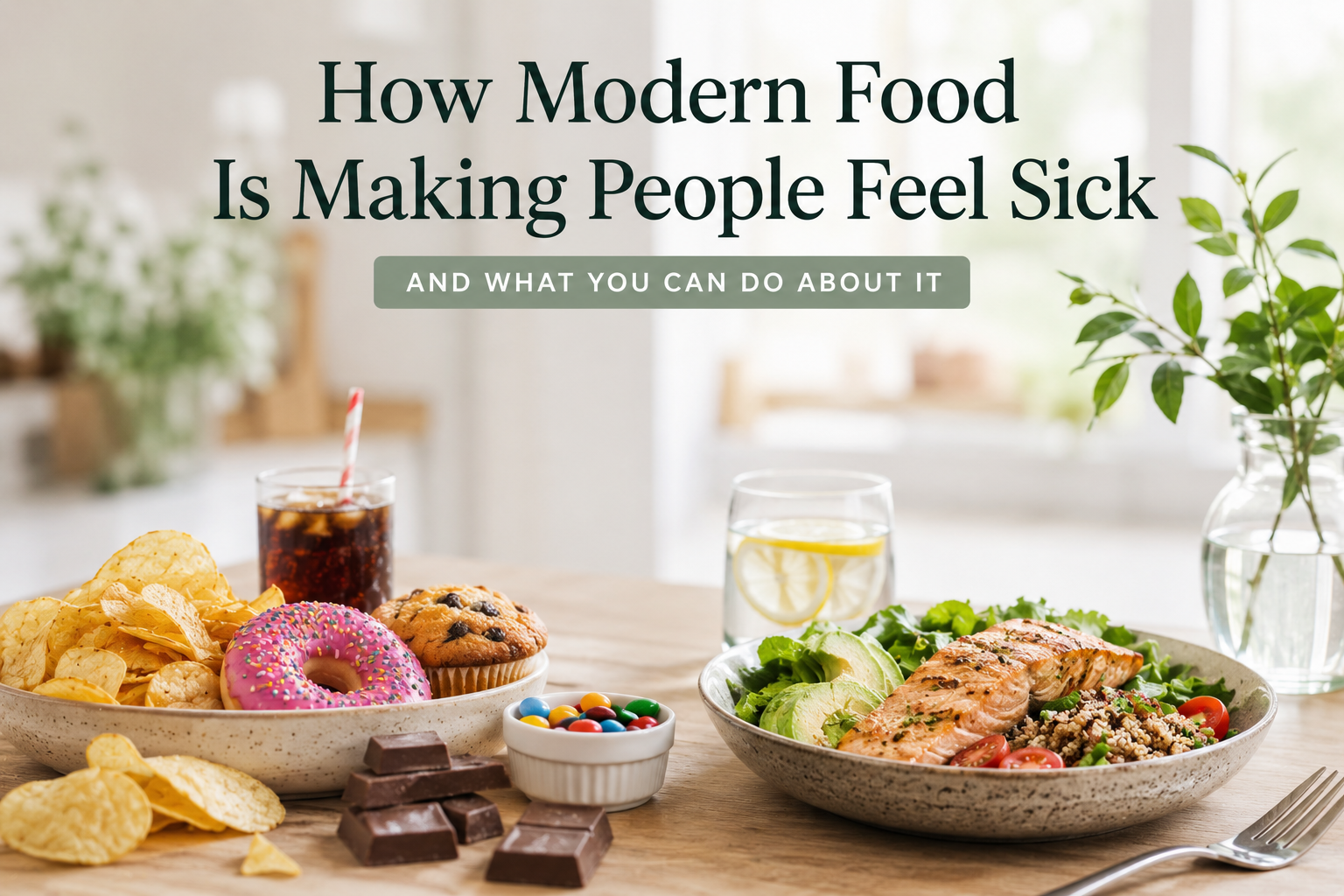
Modern food looks more convenient than ever — but many people feel worse than ever.
Low energy. Brain fog. Bloating. Anxiety. Poor sleep. Constant cravings. Inflammation. Digestive problems.
And for many people, the issue may not simply be “eating too much.” It may be what we’re eating — and what’s been done to our food over the last several decades.
Today’s food system is filled with ultra-processed ingredients, artificial additives, hidden sugars, inflammatory oils, and products engineered for shelf life instead of human health. While these foods are everywhere, our bodies were never designed to consume them in the quantities we do now.
Ultra-Processed Foods Are Everywhere
Many foods marketed as “healthy” are still heavily processed.
Protein bars, flavored yogurts, cereals, frozen meals, snack foods, and even salad dressings often contain:
Seed oils
Artificial flavors
Preservatives
Added sugars
Emulsifiers
Synthetic dyes
Refined starches
These ingredients may improve taste and shelf stability, but they can also affect digestion, blood sugar, inflammation, and overall health in ways many people don’t realize.
Research increasingly links ultra-processed foods to:
Obesity
Type 2 diabetes
Heart disease
Depression
Digestive issues
Chronic inflammation
Blood Sugar Spikes Drain Your Energy
One major issue with modern food is how aggressively it spikes blood sugar.
Many packaged foods digest quickly and create rapid rises — and crashes — in glucose levels. This rollercoaster can leave people feeling:
Tired after meals
Shaky or anxious
Constantly hungry
Mentally foggy
Dependent on caffeine
Even foods labeled “healthy” can trigger this cycle when they’re loaded with refined carbs and hidden sugars.
Modern Diets Are Often Nutrient Poor
Calories are easy to find today. Nutrients are not.
Many processed foods are stripped of:
Fiber
Magnesium
Potassium
Omega-3 fats
Antioxidants
Natural enzymes
As a result, people can eat plenty of calories while still feeling depleted.
This may help explain why so many people experience:
Fatigue
Muscle cramps
Poor sleep
Low mood
Cravings
Reduced recovery
Food Additives May Affect Gut Health
Your gut plays a massive role in:
Immunity
Inflammation
Mood
Metabolism
Energy
But many modern additives may negatively affect the gut microbiome.
Some researchers are studying whether emulsifiers, artificial sweeteners, preservatives, and certain food chemicals contribute to gut irritation and increased intestinal permeability in some individuals.
While not everyone reacts the same way, many people notice improvements when they reduce heavily processed foods and focus on simpler ingredients.
Convenience Came With Tradeoffs
Modern food became optimized for:
Speed
Low cost
Long shelf life
Hyper-palatable taste
Not necessarily for health.
Many foods are specifically engineered to make people overeat by combining:
Sugar
Salt
Refined carbs
Unhealthy fats
This combination can override normal fullness signals and make moderation difficult.
What You Can Do Instead
The goal doesn’t have to be perfection.
Small shifts toward less processed foods can make a major difference:
Eat more whole foods
Focus on protein and fiber
Read ingredient labels
Reduce added sugars
Limit ultra-processed snacks
Prioritize sleep and hydration
Choose foods with fewer ingredients
Simple foods often work best:
Eggs
Fruit
Vegetables
Quality meats
Potatoes
Rice
Nuts
Olive oil
Yogurt
Final Thoughts
Many people blame themselves for feeling tired, inflamed, or unhealthy — without realizing how dramatically the food environment has changed.
Modern food is convenient, addictive, and everywhere. But convenience does not always equal nourishment.
The good news is that the body is incredibly responsive. Even small improvements in food quality can lead to noticeable changes in energy, digestion, mood, and overall well-being over time.
