

🥦 Top 25 Foods to Reduce Inflammation (Simple, Evidence-Based Guide)
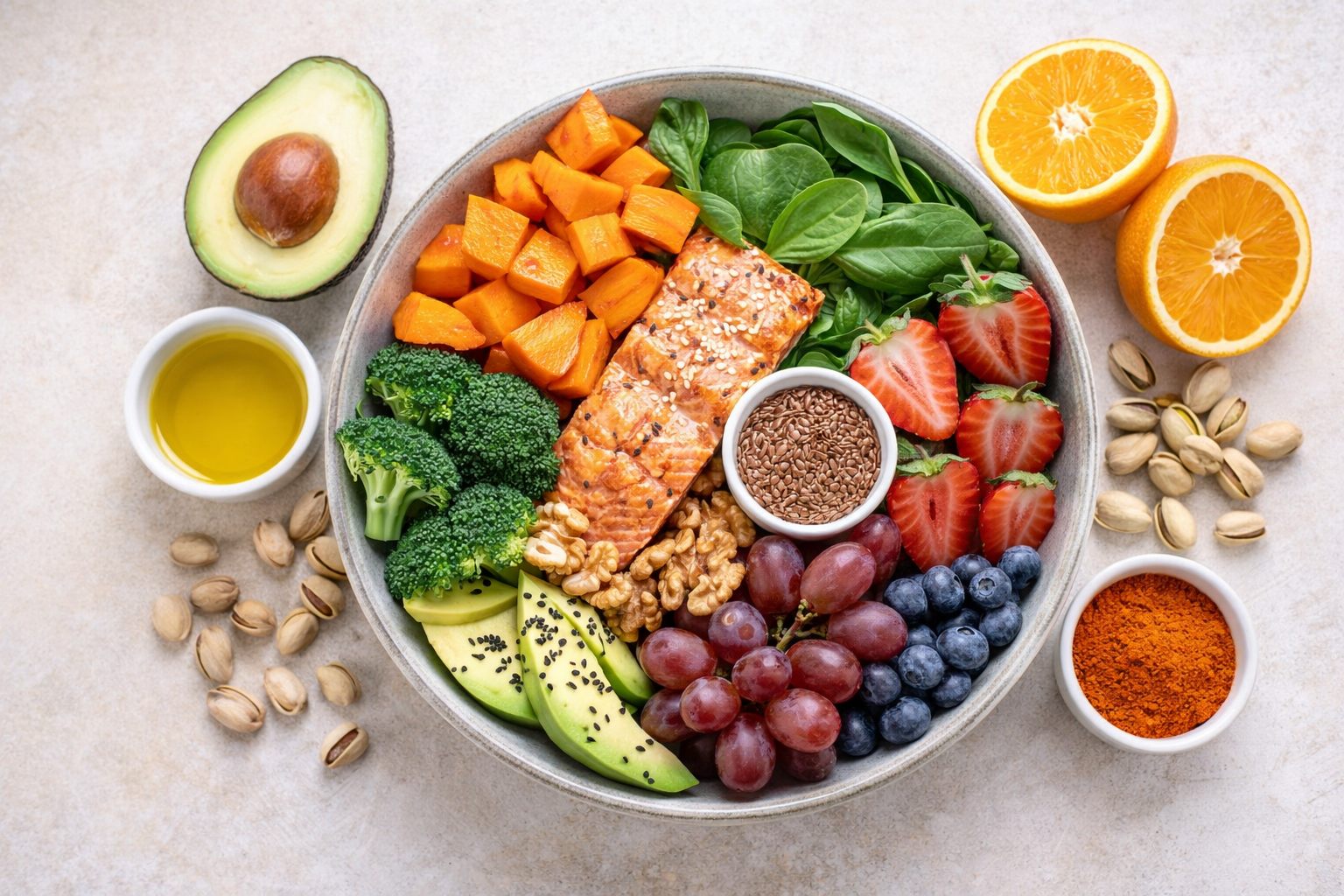
A bowl of anti-inflammatory foods including salmon, avocado, berries, nuts, and vegetables
Chronic inflammation has been linked to many serious health conditions.
These include heart disease, diabetes, obesity, arthritis, and even cognitive decline.
Over time, low-grade inflammation can quietly impact energy levels, recovery, and overall health.
The key is reducing it through consistent lifestyle choices—especially diet.
Top 25 Anti-Inflammatory Foods
Blueberries
Rich in antioxidants called anthocyanins that help reduce oxidative stress and inflammation.
Strawberries
High in vitamin C and polyphenols that support immune function and lower inflammatory markers.
Oranges
Packed with vitamin C and flavonoids that help combat inflammation and support overall health.
Grapes
Contain resveratrol, a compound linked to reduced inflammation and improved heart health.
Apples
High in fiber and quercetin, which may help reduce inflammation and support gut health.
Spinach
Loaded with vitamins, minerals, and plant compounds that help fight inflammation.
Broccoli
Contains sulforaphane, a powerful compound known to reduce inflammation.
Kale
Rich in antioxidants and vitamin K, which support anti-inflammatory processes.
Carrots
High in beta-carotene, which helps protect cells from inflammation.
Tomatoes
Contain lycopene, a powerful antioxidant linked to reduced inflammation.
Avocado
Packed with healthy fats that help lower inflammation and support heart health.
Olive Oil
A staple of the Mediterranean diet with strong anti-inflammatory effects.
Salmon
Rich in omega-3 fatty acids that help reduce inflammation throughout the body.
Sardines
Another excellent source of omega-3s that support heart and brain health.
Walnuts
Contain plant-based omega-3s and antioxidants that help reduce inflammation.
Almonds
Rich in vitamin E and healthy fats that support anti-inflammatory pathways.
Pistachios
Provide antioxidants and healthy fats that may help reduce inflammation.
Brazil Nuts
High in selenium, which plays a key role in reducing inflammation and oxidative stress.
Turmeric
Contains curcumin, one of the most researched anti-inflammatory compounds.
Ginger
Known for its powerful anti-inflammatory and digestive-support benefits.
Garlic
Supports immune health and helps reduce inflammation naturally.
Green Tea
Packed with catechins, powerful antioxidants that reduce inflammation.
Hibiscus Tea
Contains polyphenols that may help lower inflammation and blood pressure.
Sweet Potatoes
Rich in fiber and beta-carotene to support immune function and reduce inflammation.
Flaxseeds
High in omega-3 fatty acids and fiber that help lower inflammation.
Foods That Can Increase Inflammation
Try to limit foods that can increase inflammation over time:
Processed foods
Sugary drinks
Refined carbohydrates
Trans fats
Excess alcohol
Final Thoughts
Reducing inflammation doesn’t require extreme diets or complicated plans.
Small, consistent changes—like adding more whole foods—can make a meaningful difference over time.
Start simple, stay consistent, and let your habits build momentum.
Disclaimer: This content is for informational purposes only and is not intended as medical advice. Always consult a qualified healthcare professional before making changes to your diet or health routine.
