

Why You Feel Tired After Eating (And What It Could Mean)
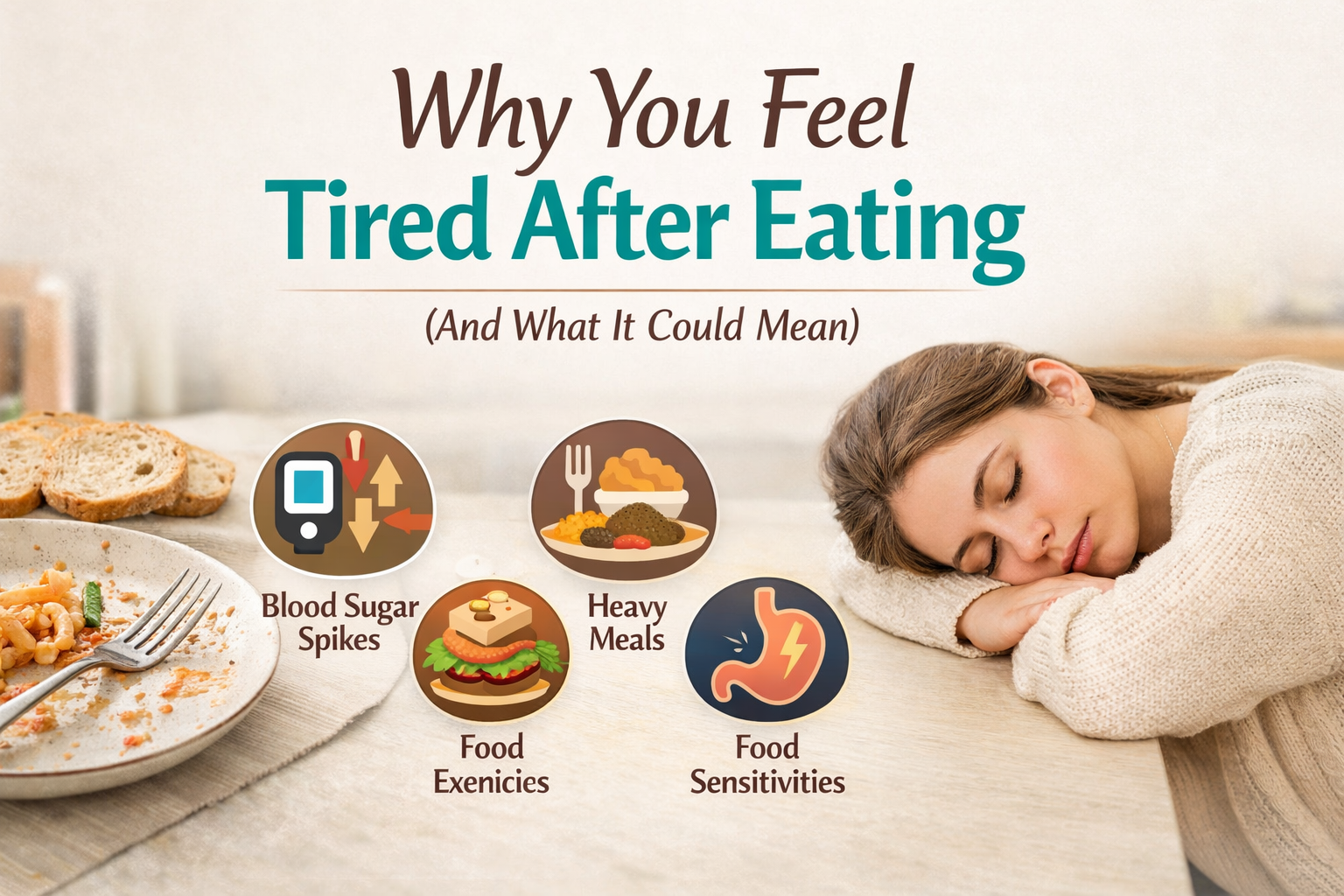
Feeling tired after eating is more common than many people realize. While food is meant to provide energy, certain patterns can leave you feeling sluggish instead.
Understanding why this happens can help you make small changes that support more consistent energy.
Common Reasons You Feel Tired After Eating
Blood Sugar Spikes and Crashes
Meals high in refined carbohydrates or sugar can cause rapid spikes
These spikes are often followed by a drop in energy
This can lead to fatigue shortly after eating
Large or Heavy Meals
Bigger meals require more energy to digest
This can leave you feeling slower or more tired
Heavier meals may intensify this effect
Food Sensitivities
Certain foods may trigger reactions in the body
This can show up as fatigue, brain fog, or discomfort
Histamine-related foods may be a factor for some people
Poor Sleep
Lack of sleep can make fatigue more noticeable after meals
The body may already be low on energy
Eating may highlight this underlying issue
Digestive Load
The body uses energy to break down food
If digestion is strained, this can contribute to fatigue
This may be more noticeable with certain foods
How To Reduce Fatigue After Eating
Balance Your Meals
Include protein, fats, and carbohydrates together
This helps support more stable energy
Balanced meals may reduce crashes
Avoid Large Sugar Spikes
Limit refined carbohydrates when possible
Pair carbohydrates with other nutrients
This can help prevent rapid energy drops
Pay Attention to Food Reactions
Notice how you feel after different meals
Identify patterns over time
Adjust based on what works best for you
Eat Moderate Portions
Smaller meals may be easier to digest
This can help reduce the energy demand on the body
Consistency can help improve how you feel
Final Thoughts
Feeling tired after eating can be influenced by a variety of factors, from meal composition to overall lifestyle habits.
Small adjustments to how and what you eat can help support more consistent energy throughout the day. In some cases, allowing a few hours between your last meal and bedtime may also help support better digestion and more restful sleep.
