

👉 Best Foods for Sleep (What to Eat for Better Sleep Naturally)
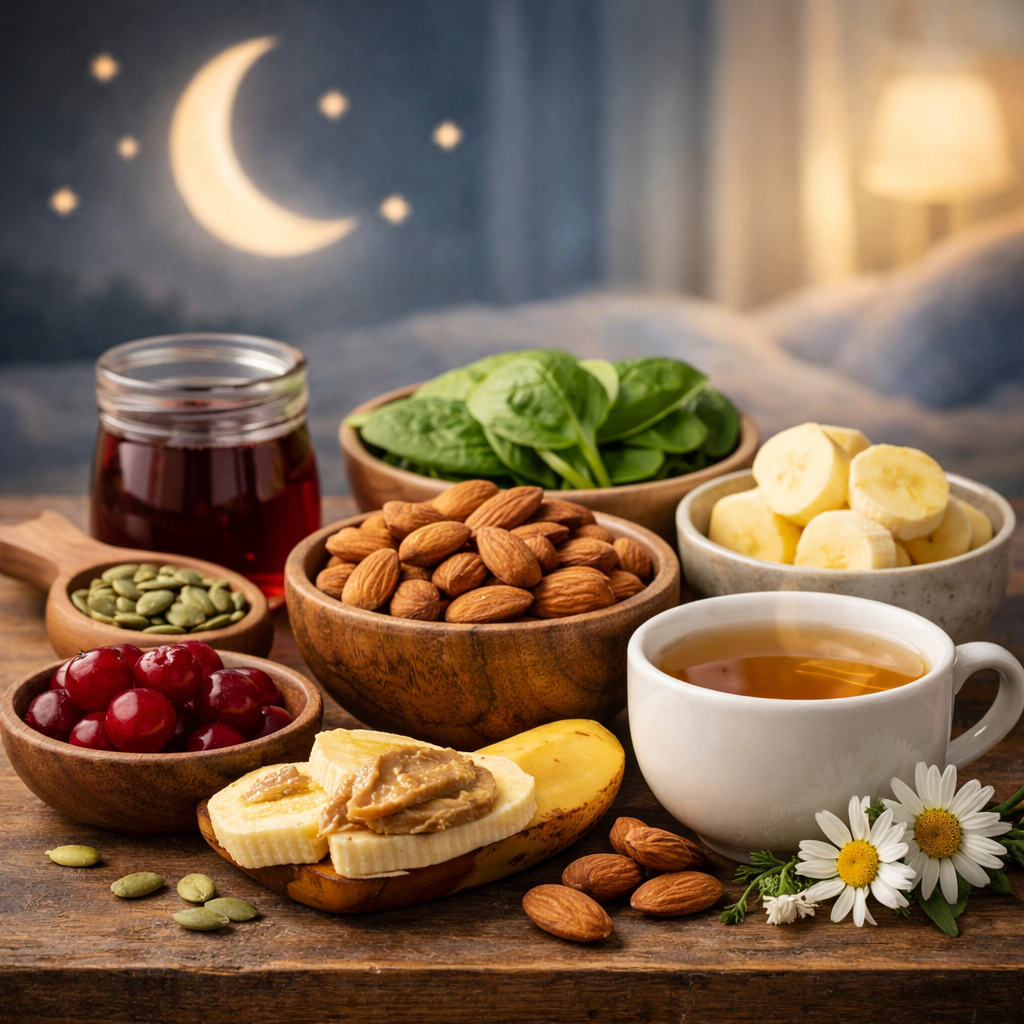
Foods for a restful night
What you eat can have a direct impact on how well you sleep. Certain foods contain nutrients that help your body relax, regulate melatonin, and support deeper, more restful sleep.
Best Foods for Sleep
Best overall: Pumpkin seeds (rich in magnesium)
Best for melatonin support: Tart cherries
Best for relaxation: Almonds
Best nighttime snack: Banana with almond butter
Best drink before bed: Chamomile tea
Why Certain Foods Help Improve Sleep
Certain foods can support better sleep because they contain key nutrients that help regulate your body’s sleep cycle. These include magnesium, tryptophan, and melatonin—each of which plays a role in helping your body relax and prepare for rest.
Magnesium helps calm the nervous system and relax muscles, making it easier to fall asleep. Tryptophan is an amino acid that supports the production of serotonin and melatonin, both of which are important for sleep regulation. Some foods also naturally contain small amounts of melatonin, which can help signal to your body that it’s time to sleep.
By including these nutrients in your evening routine, you may be able to fall asleep faster and improve overall sleep quality.
Best Foods for Sleep (What to Eat at Night)
Pumpkin Seeds (Magnesium Powerhouse)
Pumpkin seeds are one of the best natural sources of magnesium, which helps relax the nervous system and support deeper sleep. A small handful in the evening can be an easy way to support relaxation before bed.
Almonds (Relaxation and Healthy Fats)
Almonds provide magnesium and healthy fats that support steady blood sugar levels overnight. This can help prevent waking up in the middle of the night.
Tart Cherries (Natural Melatonin Source)
Tart cherries are one of the few natural food sources of melatonin. Drinking tart cherry juice or eating cherries in the evening may help regulate your sleep-wake cycle.
Bananas (Magnesium + Potassium Combo)
Bananas contain both magnesium and potassium, which help relax muscles and support overall recovery. Pairing a banana with a small amount of protein or fat can make for a great pre-bed snack.
Chamomile Tea (Calming Herbal Support)
Chamomile tea has natural calming properties and is often used to promote relaxation before sleep. It’s a simple, caffeine-free option to include in your nighttime routine.
When to Eat for Better Sleep
Timing your food intake can play an important role in sleep quality. Eating the right foods too close to bedtime may cause discomfort, while eating them too early may limit their benefits.
For best results, aim to eat sleep-supporting foods 1–2 hours before bed. This gives your body enough time to digest while still allowing nutrients like magnesium and tryptophan to support relaxation.
Light snacks tend to work best. Heavy meals right before bed can interfere with digestion and may disrupt sleep.
Safety and Considerations
While many foods can support better sleep, it’s important to pay attention to how your body responds. Some people may be sensitive to certain foods or experience digestive discomfort if eating too close to bedtime.
It’s generally best to avoid:
Heavy, high-fat meals right before bed
Caffeine in the afternoon or evening
Large portions late at night
Everyone’s body is different, so it may take some trial and error to find what works best for you.
For additional support, certain nutrients like magnesium can also play a key role in improving sleep quality.
