

Cold Plunge vs Sauna: Benefits, Differences, and When to Use Each
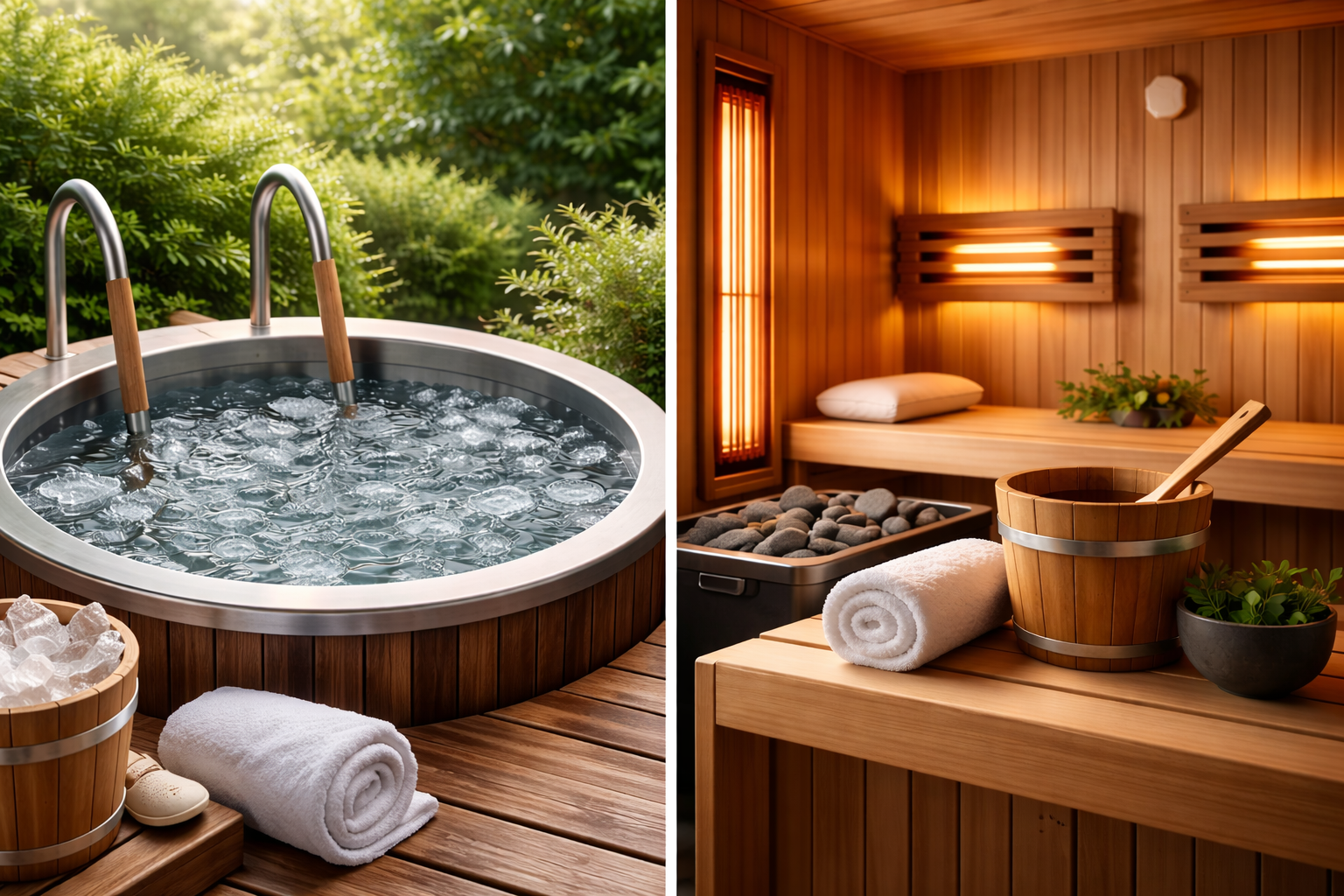
Cold Plunge vs Sauna: What’s the Difference
Cold plunges expose the body to very cold temperatures, typically through ice baths or cold water immersion. This creates a rapid response in the body, including vasoconstriction and activation of the nervous system.
Saunas use heat to raise body temperature, increasing heart rate and circulation. This promotes relaxation and activates different physiological responses compared to cold exposure.
Cold Plunge Benefits
Cold plunges expose the body to sudden cold, which can trigger a strong response in the nervous system. This may help increase alertness and improve mental clarity shortly after use.
Cold exposure may also help reduce inflammation and support recovery, especially after intense physical activity. The constriction and re-expansion of blood vessels may play a role in this process.
Some people use cold plunges to build resilience to stress, as the body adapts to short-term discomfort over time.
Sauna Benefits
Saunas expose the body to heat, which can promote relaxation and support circulation. This may help reduce stress and create a calming effect after a long day or workout.
Heat exposure may also support recovery and cardiovascular health when used consistently, offering a different set of benefits compared to cold exposure.
When To Use Cold Plunge vs Sauna
Cold plunges are often used after intense exercise to help reduce inflammation and support recovery. They may also be useful when you want a quick boost in alertness or mental clarity.
Saunas are typically used for relaxation, stress reduction, and overall recovery. Many people use them later in the day to help unwind or support sleep.
Some routines include both, using cold exposure followed by heat, or alternating between the two depending on the goal.
Safety Considerations
Both cold plunges and saunas can be beneficial, but it’s important to use them safely. Extreme temperatures—hot or cold—can place stress on the body if not used properly.
Start with shorter sessions and gradually increase duration as your body adapts. Staying hydrated is important, especially when using a sauna.
If you feel dizzy, lightheaded, or uncomfortable during either, it’s best to stop and allow your body to return to normal.
People with certain medical conditions, or those who are pregnant, should speak with a healthcare provider before using cold or heat therapy regularly.
Final Thoughts
Cold plunges and saunas offer different benefits, but both can support recovery, stress management, and overall well-being.
The best choice depends on your goals—whether you’re looking for energy and alertness or relaxation and recovery.
Some people benefit from using both as part of a consistent routine.
