

Hidden Ingredients in "Healthy" Foods: What You're Really Eating
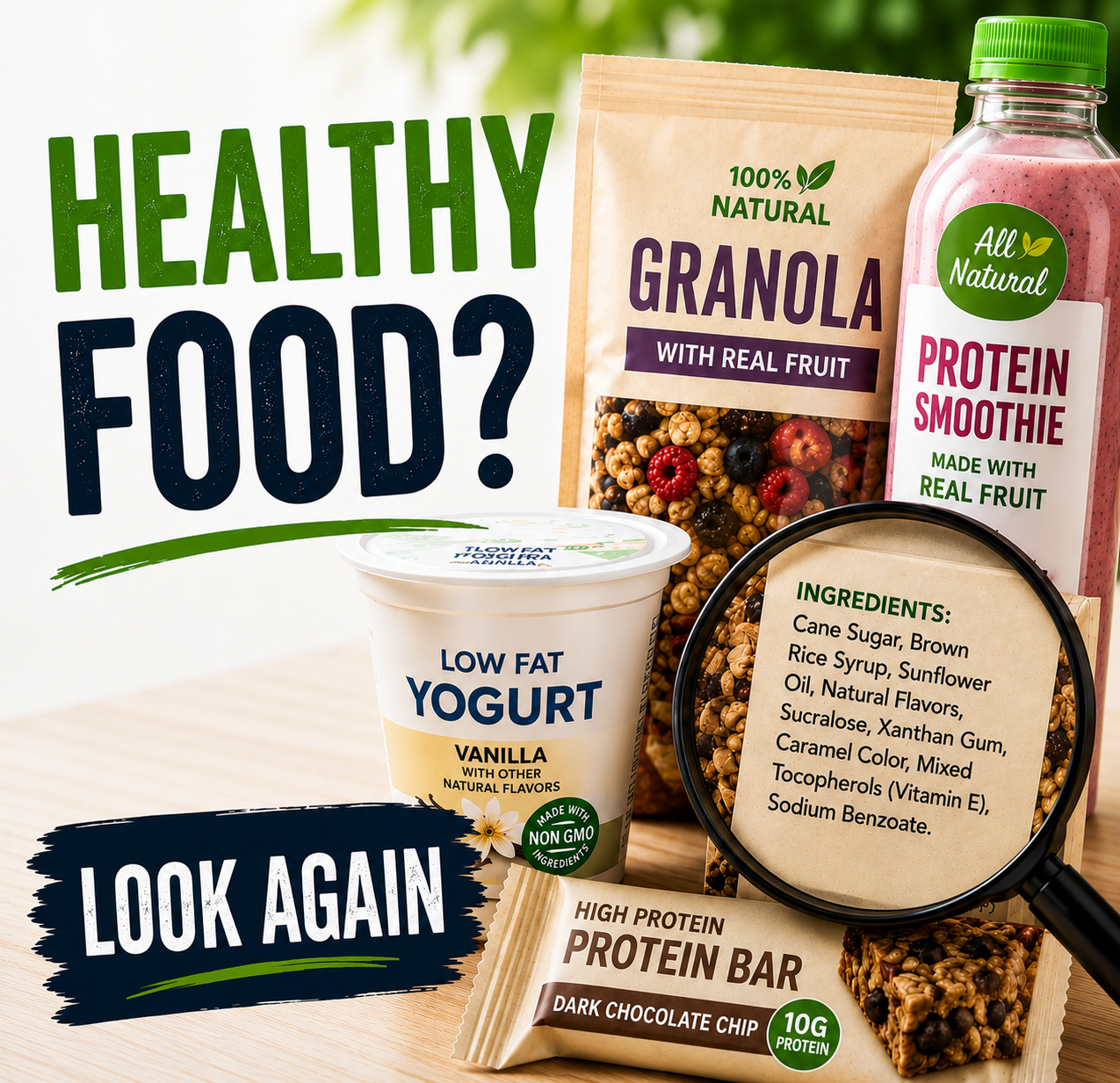
Walk through any grocery store and you'll find shelves packed with foods labeled as "healthy," "natural," "organic," "low-fat," or "heart healthy." While many of these products sound like smart choices, the ingredients list often tells a different story.
The truth is that some of the foods marketed as healthy contain ingredients that may work against your wellness goals.
The Health Halo Effect
Food companies understand that consumers want healthier options. Terms like "natural," "whole grain," and "made with real fruit" can create a positive impression, even when the product contains highly processed ingredients.
This phenomenon is known as the "health halo effect"—when marketing makes a product seem healthier than it actually is.
Hidden Ingredient #1: Added Sugars
One of the most common ingredients hiding in healthy foods is added sugar.
You might expect sugar in candy and soda, but it can also be found in:
Yogurt
Granola
Protein bars
Oatmeal packets
Smoothies
Salad dressings
Manufacturers often use different names for sugar, including:
Cane sugar
Brown rice syrup
Maltodextrin
Agave nectar
Fruit juice concentrate
Dextrose
Even foods marketed as healthy can contain surprisingly large amounts of sugar.
Hidden Ingredient #2: Seed Oils
Many packaged foods contain highly refined vegetable oils such as:
Soybean oil
Corn oil
Cottonseed oil
Canola oil
Sunflower oil
These oils are commonly used because they are inexpensive and help extend shelf life.
While research continues regarding their health effects, many people choose to limit highly processed oils and instead focus on whole-food fat sources such as avocados, olives, nuts, seeds, and fatty fish.
Hidden Ingredient #3: Artificial Sweeteners
Products labeled "sugar-free" often contain artificial sweeteners such as:
Sucralose
Aspartame
Saccharin
Acesulfame potassium
These ingredients may help reduce calories, but some individuals report digestive issues, cravings, or sensitivity after consuming them.
Hidden Ingredient #4: Gums and Thickeners
Many dairy alternatives, protein drinks, and packaged foods contain additives designed to improve texture.
Common examples include:
Xanthan gum
Guar gum
Carrageenan
Gellan gum
Some people tolerate these ingredients well, while others may experience digestive discomfort.
Hidden Ingredient #5: "Natural Flavors"
The term "natural flavors" appears on countless food labels.
While these flavorings originate from natural sources, the term does not reveal exactly what ingredients were used or how extensively they were processed.
For consumers who prefer transparency, this can make it difficult to know precisely what they are eating.
Hidden Ingredient #6: Preservatives
Even foods marketed as wholesome may contain preservatives to extend shelf life.
Examples include:
Potassium sorbate
Sodium benzoate
Calcium propionate
While approved for use in food, many people prefer minimizing highly processed ingredients whenever possible.
How to Become a Better Label Reader
Instead of relying on marketing claims, flip the package over and read the ingredient list.
A few simple guidelines:
✓ Choose foods with short ingredient lists.
✓ Focus on ingredients you recognize.
✓ Prioritize whole foods whenever possible.
✓ Watch for multiple forms of sugar.
✓ Don't assume "healthy" on the front means healthy inside.
The Bottom Line
Not every food marketed as healthy deserves a place in your shopping cart. Many products contain hidden sugars, refined oils, additives, and preservatives that may not align with your wellness goals.
The good news is that becoming an informed consumer doesn't require perfection. By reading labels and focusing on whole, minimally processed foods most of the time, you can make choices that better support your long-term health. A good rule of thumb is to prioritize shopping the outer aisles of the grocery store, where most whole foods are typically found.
Sometimes the healthiest foods don't come with a health claim at all—they simply come from nature.
