

Could You Need More Magnesium? Signs, Benefits, and Food Sources
Magnesium doesn't get as much attention as vitamins D or C, but it may be one of the most important nutrients in the body. In fact, magnesium is involved in hundreds of biochemical processes that help support everything from energy production and muscle function to sleep and stress management. Yet many people may not be getting enough.
Why Magnesium Matters
Magnesium helps regulate numerous functions throughout the body, including:
Muscle and nerve function
Energy production
Blood sugar regulation
Bone health
Protein synthesis
Heart rhythm
Sleep quality
Because magnesium plays a role in so many processes, low intake may affect the body in a variety of ways.
Common Signs You May Need More Magnesium
While symptoms can have many causes, some signs associated with inadequate magnesium intake include:
Poor Sleep
Magnesium helps support relaxation and healthy nervous system function. Some people find that increasing magnesium-rich foods helps support better sleep quality.
Muscle Cramps and Twitches
Muscles rely on a balance of minerals to function properly. Low magnesium intake may contribute to cramping, tightness, or muscle twitches in some individuals.
Feeling Stressed or Overwhelmed
Magnesium is sometimes called the "relaxation mineral" because of its role in supporting the nervous system and stress response.
Fatigue and Low Energy
Since magnesium is involved in energy production, inadequate levels may contribute to feelings of low energy.
Frequent Headaches
Some research suggests magnesium may play a role in supporting healthy blood vessel function and nervous system activity.
Magnesium and Histamine
Magnesium may also be important for individuals interested in histamine balance and mast cell health. Mast cells are immune cells that release histamine, and some research suggests magnesium may help support normal mast cell function. Additionally, magnesium plays a role in supporting the nervous system, healthy sleep, and the body's stress response—all areas that can be affected when histamine levels are elevated. While magnesium is not a treatment for histamine intolerance or mast cell activation, ensuring adequate intake may be a helpful part of an overall wellness strategy.
To better understand the connection between histamine and overall wellness, check out our articles on What Is Histamine Intolerance?, Mast Cell Activation Explained, Signs of Histamine Intolerance and Foods High in Histamine.
Foods Rich in Magnesium
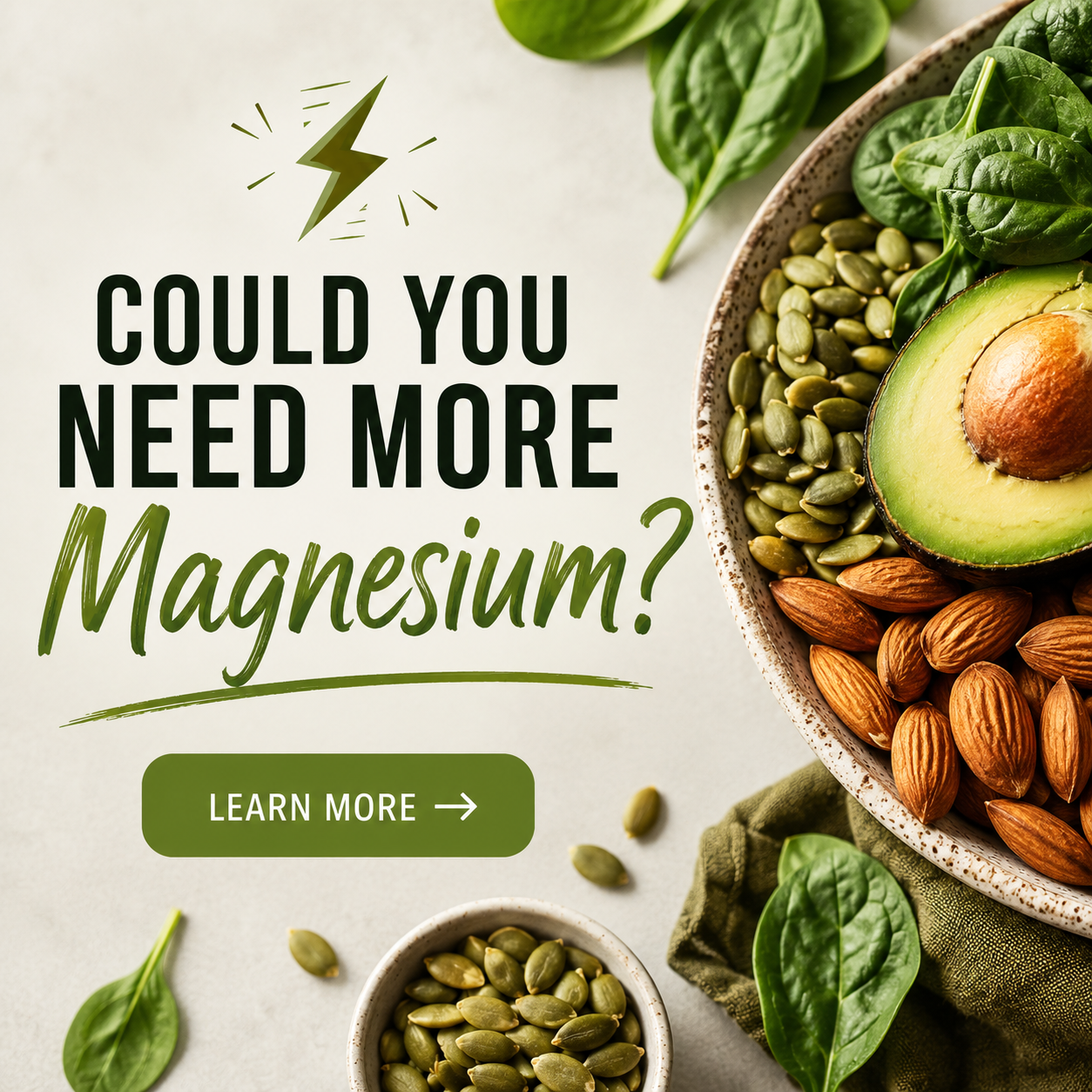
One of the best ways to support magnesium intake is through whole foods.
Some magnesium-rich options include:
🥬 Spinach
🥑 Avocados
🌰 Almonds
🌾 Quinoa
🥜 Cashews
Adding a variety of these foods to your diet can help increase your magnesium intake naturally.
Should You Take a Magnesium Supplement?
Some people choose to supplement magnesium, especially if dietary intake is low.
Common forms include:
Magnesium Glycinate
Magnesium Citrate
Magnesium Malate
Magnesium Threonate
Each form has different characteristics and may be used for different purposes.
Before starting any supplement, it's always a good idea to discuss your individual needs with a qualified healthcare professional.
If you would like to learn more, explore our guide on Magnesium Benefits.
Simple Ways to Get More Magnesium
Try adding one or two magnesium-rich foods to your routine each day:
✓ Sprinkle pumpkin seeds on salads
✓ Add spinach to smoothies
✓ Enjoy a handful of almonds as a snack
✓ Include beans in soups and meals
✓ Choose dark chocolate as an occasional treat
Small changes can add up over time.
The Bottom Line
Magnesium plays an important role in hundreds of functions throughout the body, yet many people may not be consuming enough through their diet. If you're looking to support your overall wellness, increasing magnesium-rich foods may be a simple place to start. Sometimes the smallest nutrients can make the biggest difference. A food-first approach focused on whole, minimally processed foods is often one of the best ways to support healthy magnesium intake and overall well-being.
